Mapping Incentive Chains from Entry-Level Spins to Accumulated Tier Rewards
Morgan Zimmermann · Sep 24, 2026

Mapping Incentive Chains from Entry-Level Spins to Accumulated Tier Rewards
Digital gaming platforms structure incentive pathways to connect initial entry spins with subsequent deposit boosts and progressive tier accumulations, creating sequences that encourage continued participation across multiple stages. Research from industry reports shows these pathways typically begin with no-deposit free spins that introduce players to slot mechanics and game interfaces before transitioning into deposit-matched offers that scale rewards based on initial funding amounts.
Sequential Structures in Modern Platforms
Entry spins serve as the starting point in many systems, granting limited free rounds on selected titles that require account verification but no upfront payment, after which platforms present deposit boosts as the next layer. Data indicates these boosts often match player deposits at percentages ranging from 50 to 200 percent, with maximum caps that vary by jurisdiction and operator policy. Those who've examined player tracking logs note that completion of wagering requirements from the entry phase unlocks eligibility for the deposit stage, forming a chained progression rather than isolated promotions.
Platforms operating in North American markets have refined these sequences through software integrations that automatically carry forward progress metrics from spins to deposit bonuses. According to figures released by the American Gaming Association, mobile-first ecosystems recorded increased adoption of such layered incentives throughout 2025 and into September 2026, as operators responded to competitive pressures by linking short-term rewards with longer-term accumulation programs.
Integration with Tiered Accumulation Systems
Tiered programs extend the pathway beyond initial deposits by converting completed bonus activity into loyalty points that determine player status levels. Observers note that points earned from wagering on deposit-boosted funds feed directly into tier calculations, where thresholds unlock additional benefits such as higher match rates on future deposits or exclusive spin allocations. This integration means that players who advance through entry spins and deposit boosts accumulate status faster than those engaging with single-layer offers alone.
Studies of retention patterns reveal that operators in Canadian provinces and Australian states have implemented similar tier linkages, using centralized player accounts that track activity across devices. Evidence from regulatory filings shows these systems reduce fragmentation by consolidating data points, allowing platforms to adjust incentive values based on cumulative spend and play frequency rather than isolated sessions.
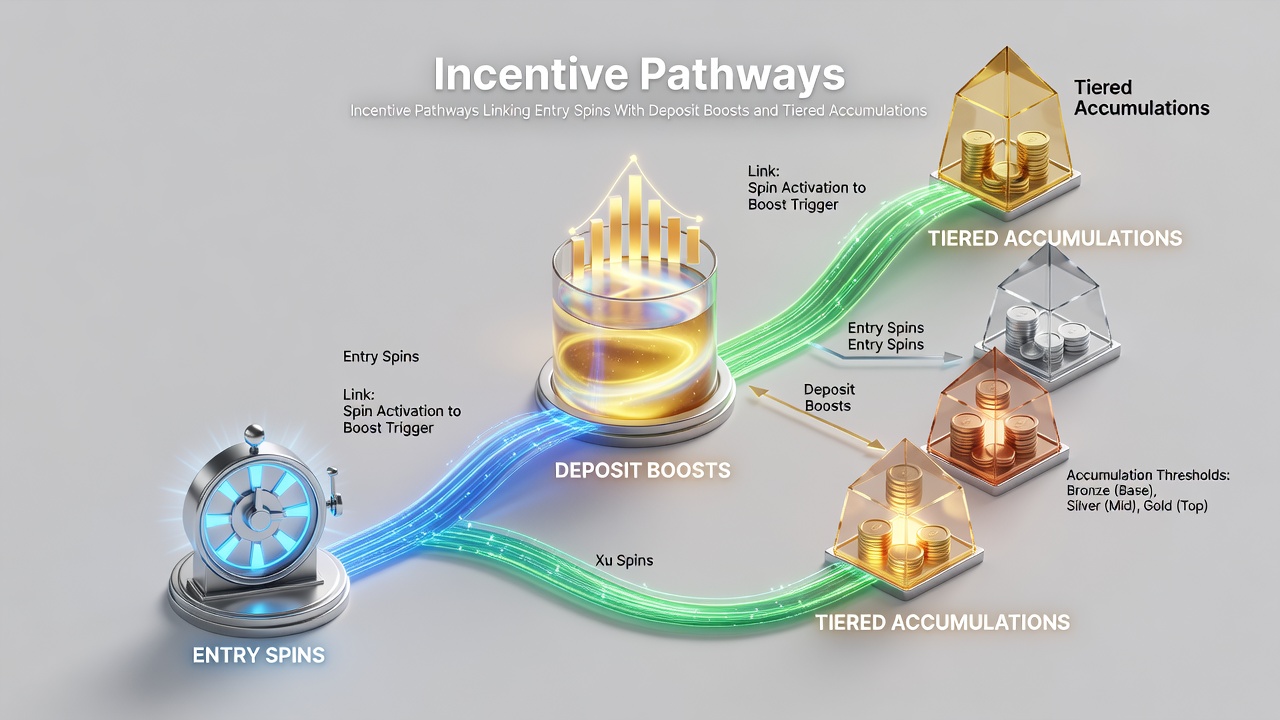
What's notable is the role of validation thresholds in maintaining pathway integrity. Platforms enforce minimum play volumes before advancing points to higher tiers, which prevents rapid status inflation while ensuring that deposit boosts contribute meaningfully to long-term accumulations. Reports from European regulatory bodies outside the UK highlight that such controls have become standard in licensed operations by September 2026.
Regional Variations and Platform Adaptations
North American operators tend to emphasize mobile compatibility in these incentive chains, with automatic progression tracking that carries spin results into deposit interfaces without manual code entry. In contrast, platforms targeting European and Asian markets often incorporate additional verification steps at each transition point, reflecting differing compliance requirements. Research indicates these adaptations maintain core pathway mechanics while aligning with local rules on bonus transparency and player fund segregation.
One study of platform analytics found that players who complete the full sequence from entry spins through multiple deposit boosts reach mid-tier status approximately 30 percent faster than those starting directly at deposit stages. This acceleration occurs because early spin activity contributes baseline points that compound with deposit-derived rewards, creating momentum toward higher accumulation brackets.
Technical Implementation Across Ecosystems
Backend systems handle the linkages through application programming interfaces that update player profiles in real time as spins convert to points and deposits trigger matched amounts. These interfaces also enforce expiration rules that apply uniformly across the pathway, ensuring that unused boosts or points do not carry over indefinitely. Data from September 2026 industry summaries shows that operators have increased investment in such infrastructure to support higher volumes of cross-device activity.
Academic examinations of behavioral datasets further demonstrate that tiered accumulations tied to initial offers produce measurable differences in session length and repeat engagement rates. Platforms that streamline transitions between spins, deposits, and loyalty tiers report consistent patterns where players progress through stages without encountering separate registration hurdles at each level.
Conclusion
Incentive pathways that link entry spins with deposit boosts and tiered accumulations operate as interconnected sequences rather than standalone features, with technical systems ensuring progress carries forward across stages. Regional operators adapt these structures to meet compliance standards while preserving the core progression model, and data from multiple jurisdictions confirms their role in shaping player movement through reward layers. As platforms continue refining these connections, the emphasis remains on automated tracking and threshold management that supports sustained accumulation from initial participation onward.